Kim Price-Glynn
An ethic of care anchors my work, inside and outside of the classroom. As someone who performs and studies care work, I know the importance of building connection, mutual respect, and transparency in my interactions with others. After more than twenty years of teaching, I value the interpersonal relationships and processes I am building as much as the outcomes I seek. The core of my teaching philosophy is that success in the classroom is built through both caring labor and curriculum. Caring labor involves connecting with students through coursework. I see students as collaborators in the learning process, and I value their lived experiences. These principles provide a basis for me to help students understand the social world, shape their own lives, see new opportunities, and make the world a better place.
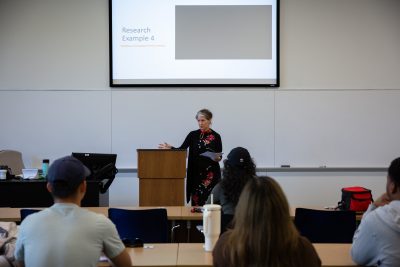
My teaching is interdisciplinary, woven across two campuses and two departments.
My tenure home is in Sociology on the Storrs campus. On the Hartford campus, I am affiliated with Geography, Sustainability, Community, and Urban Studies (GSCU), formerly Urban and Community Studies (UCS), and I am the only full-time teaching sociologist. My teaching for GSCU and Sociology includes contributing affiliated courses including Aging and Society, Sociology of Carework, Sociology of Families, Sociology of Gender, and Sociology of Sexualities. Annually, I teach Methods of Social Research to fulfil the methods requirement for both departments. To meet the needs of students across campuses, I offer methods as a distance learning synchronous course across four UConn campuses, Hartford, Waterbury, Stamford, and Storrs. It is one of my favorite courses to teach as it brings together diverse students into one UConn class and empowers them with tools to study and understand the social world. Many of my courses are “W” courses, or writing intensive for competency in major fields of study. These courses include writing-specific instruction and supervision of students through a minimum of 15 pages of writing and revision. I am active in sociology’s graduate program by teaching, advising, and holding pro-seminars. I have served on fifteen dissertation committees and I currently serve on five, one as co-chair. I have served on seven master’s thesis committees, three as major advisor, and twenty-seven area exams, four as chair.
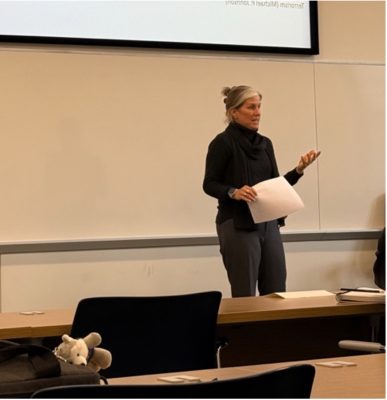
Teaching Honors and Recognition
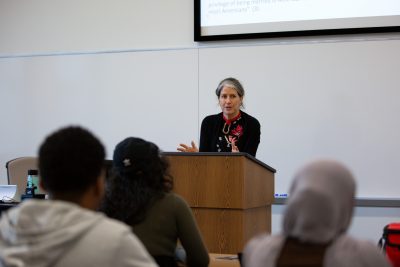
I am the inaugural recipient of the University of Connecticut College of Liberal Arts and Sciences Faculty Achievement Award for Excellence in Teaching (2010) and winner of the Hartford Matters Teaching Grant Competition for my “Sociology of Carework” course submission to fund the study of Hartford community care organizations’ innovations in care (2020).
- In the spring of 2024, I received a Hartford Matters Teaching Grant and used the funds to bring my Sociology of Carework students on a field trip to Ebony Horsewomen Inc. (EHI), a horse farm and therapeutic riding center in the city of Hartford that provides care for Hartford residents — including youth and military veterans; they also provide care for more than a dozen horses, the farm’s land, and Keney Park, in which the farm resides.
- Former student, Rafe Kimball, published a UConn Today article, “Students Study Care Innovations through a UConn Hartford Matters Teaching Grant.” as part of his independent study related to the course that describes the course and our field trip to EHI in more detail.
Student Testimonials
I am grateful for the opportunity to teach students, who work hard to reflect the respect and effort they see me putting into their classes. One of my favorite student comments is,
“Professor Price–Glynn was a literal ray of sunshine, she came into every lesson bright and happy. She made very interesting connections and opened my mind even more, which I didn’t even think was possible. She made me feel welcome and safe with every topic” (Fall 2019, Sociology of Gender).
In an evaluation from a writing intensive section of Sociology of Families, a student wrote,
“Professor Price-Glynn consistently demonstrated a strong passion for the material and clearly invested significant effort into gathering research and preparing meaningful content for us. Her organization made the course easy to follow, and she provided plenty of opportunities to earn credit, which really supported our learning. I especially appreciated how engaged she was during our in–class activities. She interacted with us, listened closely to our discussions, and created a welcoming environment where everyone felt comfortable participating. She was always kind, approachable, and encouraging, and her feedback, both in person and online and was thoughtful, detailed, and genuinely helpful. Overall, her enthusiasm, organization, and supportive approach were the most positive aspects of her teaching” (Fall 2025, Sociology of Families).
As these students’ comments attest, my dedication to both curriculum and connection go hand in hand. I believe you cannot achieve success in one without the other.